Hours
Mon: Closed
Tues: 9:00AM-5:00PM
Wed: 7:00AM-5:00PM
Thurs: 9:00AM-5:00PM
Fri: 8:00AM-4:00PM
Sat: 8:00AM-3:00PM


If you’re missing many or all of your teeth, you’ve probably heard two options mentioned: traditional dentures and implant-supported dentures. Both can restore your smile and your ability to eat, but they work in very different ways. The biggest difference comes down to one thing: what holds them in place.
The short answer: Traditional dentures rest on your gums and are held by suction, a close fit, and sometimes adhesive. Implant-supported dentures snap onto dental implants placed in the jawbone, so they stay steadier when you eat and talk and help preserve the bone. Traditional dentures cost less, need no surgery, and are ready sooner.
In this guide, we explain how each option works, how they compare for comfort, chewing, bone health, upkeep, time, and cost, and how to decide which path makes sense for you. At Lush Dental Heights, we provide dentures in Houston Heights, and our goal is to help you feel confident in your choice, whichever way you go.
Traditional dentures are removable replacement teeth that rest on your gums. A full denture replaces an entire upper or lower arch. A partial denture fills the gaps and clasps onto the natural teeth you still have.
An upper denture stays in place mainly through suction against the roof of the mouth. A lower denture has less surface to grip, so many people find it harder to keep steady. Denture adhesive can help.
Dentures are often the most accessible way to replace many teeth. They restore the ability to chew, support the lips and cheeks, and can be made relatively quickly. Where a fixed option isn’t practical right now, because of cost, bone levels, or timing, a well-made denture restores a great deal and keeps other options open for later.
Implant-supported dentures are dentures that attach to dental implants placed in the jawbone. You may also hear them called implant overdentures or snap-in dentures. Instead of relying on suction or adhesive, the denture clicks onto small attachments on the implants.
There are two main types:
As Cleveland Clinic explains, getting implant-supported dentures usually takes several steps, which can include extractions, bone grafting, implant placement, impressions, and fitting the final denture. Fixed full-arch options are a big topic of their own, and our guide What Are Full Mouth Dental Implants, and Who Are They For? walks through them.
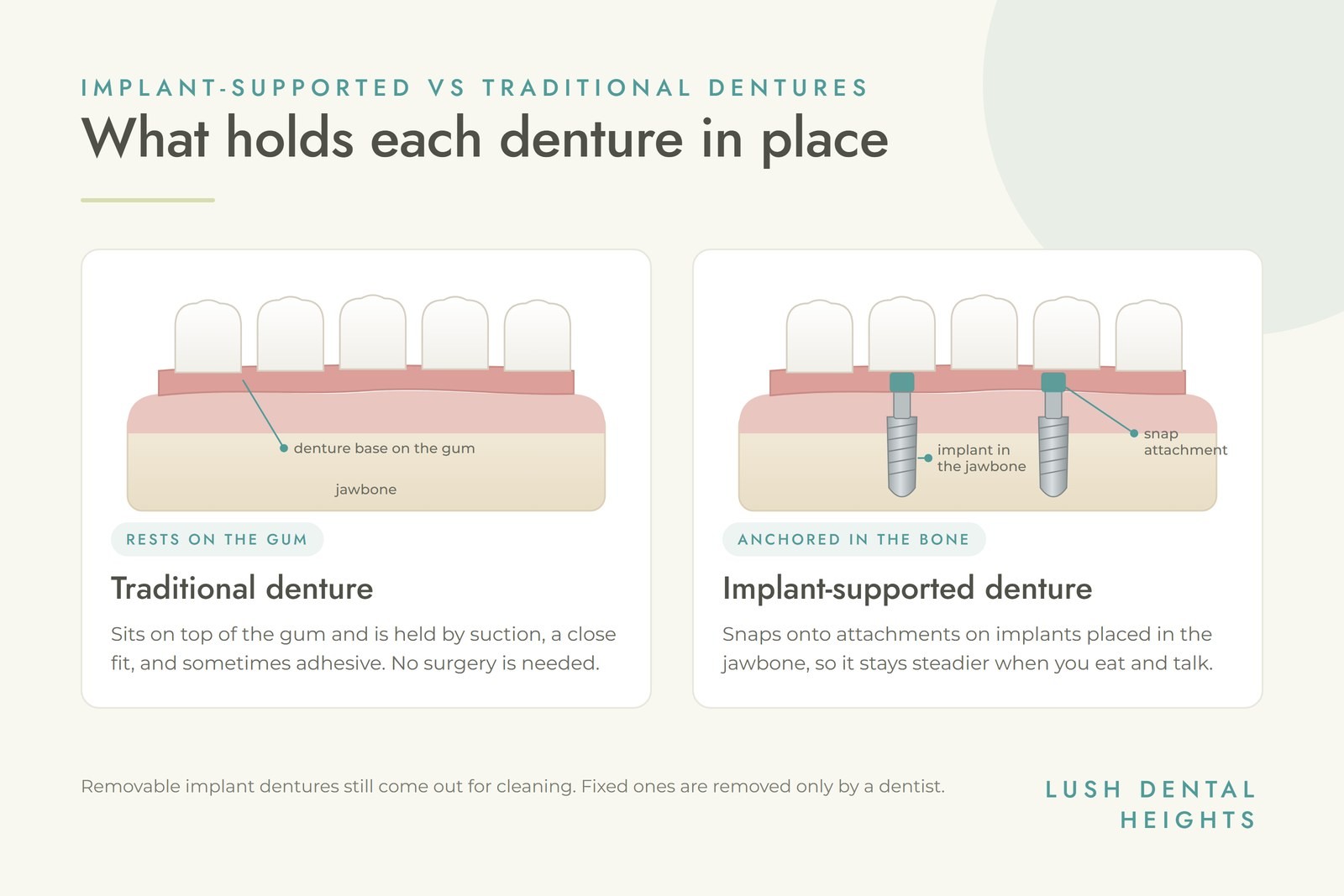
Here’s how the two compare at a glance. The sections below explain each point.
| Factor | Traditional dentures | Implant-supported dentures |
|---|---|---|
| What holds it | Suction, a close fit, and sometimes adhesive | Attachments on implants placed in the jawbone |
| Stability | Can shift, especially a lower denture | Stays steadier when you eat and talk |
| Jawbone | Rests on the gum; the bone underneath slowly shrinks | Implants keep the bone around them stimulated |
| Surgery | None | Implant surgery, sometimes with a bone graft first |
| Time | A few appointments | Several months while the implants bond with the bone |
| Upkeep | Out at night; adjustments or relines as the gums change | Cleaning around implants; attachments wear over time |
| Cost up front | Lower | Higher |
This is where implant-supported dentures shine. Because they’re anchored to implants, they don’t slip or wobble when you chew or speak. Traditional dentures, especially lower ones, can shift during meals and may rub sore spots on the gums.
Research backs this up. A 2021 review in Clinical and Experimental Dental Research pooled eight randomized trials with 812 patients. People with lower implant overdentures rated their overall satisfaction, comfort, stability, and ease of speaking higher than people with conventional dentures.
Many people with traditional dentures avoid tougher foods like steak, crunchy vegetables, or apples. An implant-supported denture holds steadier while you bite, so many people find they can enjoy a wider range of foods again.
The evidence is a little more mixed here. In the same review, chewing improved with implant overdentures, but the gain wasn’t as consistent as it was for comfort and stability. It’s a real benefit for many people, not a promise for everyone.
When teeth are lost, the jawbone that held them slowly shrinks because it no longer gets the stimulation of chewing. Traditional dentures rest on the gum, so they don’t stop this process. Over time, the ridge changes shape, which is why a denture that fit well a few years ago may need relining.
Implants sit in the bone like tooth roots and pass the force of chewing into it, which helps preserve the bone around them. As our bone grafting page explains, bone loss is fastest in the first months after a tooth is removed. If teeth have been missing for a while, a graft may be needed before implants can go in.
Traditional dentures come out at night for cleaning, and they need periodic adjustments or relines as your gums change. Removable implant overdentures are cleaned the same way, and the small attachments may need replacing from time to time. Fixed implant dentures are brushed in place, and Cleveland Clinic recommends cleaning around the implants with floss threaders and small interdental brushes.
One trade-off: in the review above, cleaning was the one area where people’s ratings got worse after they switched to an implant overdenture. There are implants and attachments to keep clean, so a good daily routine matters.
Traditional dentures can usually be made in a few appointments. At Lush Dental Heights, that means an assessment and impressions, a try-in so you can see the teeth before anything is finalized, and a fitting with follow-up adjustments.
Implant-supported dentures take longer. Implants need about three to six months to bond with the jawbone before they carry the final teeth, and a bone graft, if you need one first, adds its own healing time.
Traditional dentures cost less up front. Implant-supported dentures cost more because they involve implant surgery, the implants themselves, and special attachments. Many people still see them as a long-term investment in comfort and stability.
Dental insurance may help with parts of either option, and financing can spread the cost. For single implants, our guide How Much Does a Dental Implant Cost in Houston? breaks the numbers down.
Wondering whether a well-fitted denture is the right place to start? See how dentures work at Lush Dental Heights.
Explore DenturesYour general health, your bone, your budget, and your goals all play a part. Here’s a simple way to think about it.
Traditional dentures may suit you if:
Implant-supported dentures may suit you if:
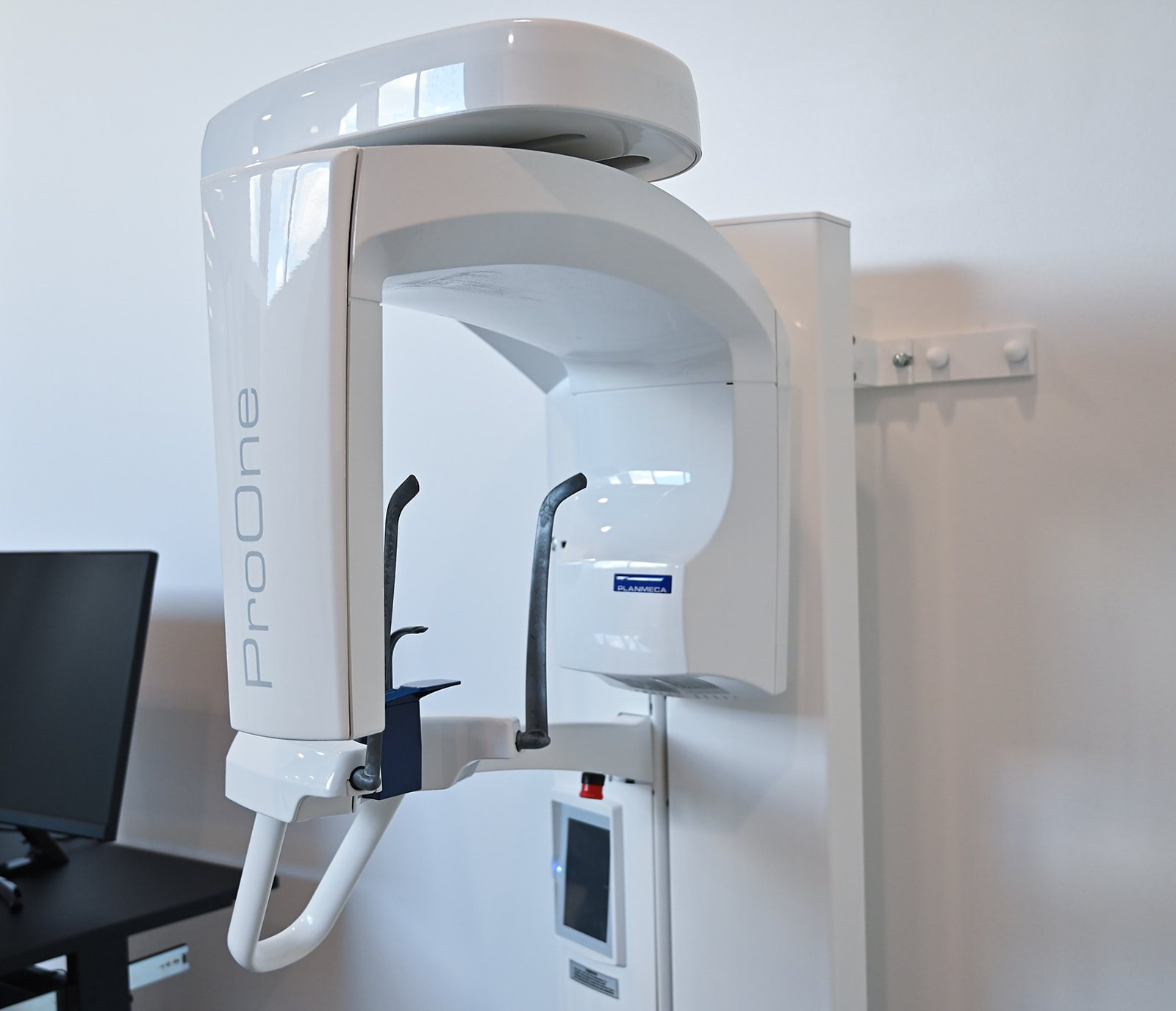
The best first step is an exam. Your dentist checks your gums, any remaining teeth, and your bone, and imaging shows whether there’s enough jawbone for implants or whether a graft would need to come first.
At Lush Dental Heights, we provide carefully fitted full and partial dentures, along with adjustments and relines to keep them comfortable as your gums change. A denture should let you eat, speak, and smile without thinking about it, and fit comes from the care taken at every step.
For patients missing one tooth or several, Dr. Pasha Noorian, DMD, also places dental implants, and he plans every implant on a 3D CBCT scan. You can read how that works in the dental implant process, step by step.
If you’re curious about implant-supported dentures, we’ll talk through your options honestly at an exam. Not every case belongs in a general practice. Larger implant treatments like these are frequently handled by a periodontist or oral surgeon, and where yours is one of those, we will say so and refer you rather than stretch the treatment to fit.
We accept most insurance plans, and financing is available through Cherry, CareCredit, Sunbit, and HFD, pending approval.
Whether you’re new to dentures or tired of one that slips, we’ll help you understand your options in a calm, non-judgmental setting. Book a denture consultation to talk about a new denture or a better fit, or an exam to talk through whether implants could be part of your plan.
We welcome patients from across the Heights, Garden Oaks, Woodland Heights, and Rice Military. Call (713) 487-9618 or request an appointment online. We’re at 5307 N Main St, Suite 200, Houston, TX 77009.
For stability and comfort, many people find they are. Implant-supported dentures don’t slip like regular dentures, and the implants help preserve the bone around them. Traditional dentures cost less, need no surgery, and can be made more quickly, so the right choice depends on your health, bone, and budget.
Often, yes. Many people start with traditional dentures and move to implant-supported dentures later. You need enough jawbone to hold the implants, and if some has been lost, it can usually be rebuilt with a bone graft first.
Usually several months. Implants need about three to six months to bond with the jawbone before the final denture is attached, and a bone graft, if you need one first, adds its own healing time.
Yes. Snap-in dentures, also called implant overdentures, click onto the implants but can be taken out every day for cleaning. Fixed implant dentures are different: only a dentist can remove them.
They help. Implants sit in the bone like tooth roots and keep the bone around them stimulated, which helps preserve it. A traditional denture rests on the gum, so the ridge underneath slowly changes shape over time.
Over time, the gums and bone under a denture change shape. A denture that fit well a few years ago may need a reline to restore a secure fit, and eventually a new denture.
Clean them every day. A removable implant denture comes out for cleaning like a regular one, and its attachments may need replacing from time to time. A fixed one is brushed in place, with floss threaders or small brushes around the implants, and both need regular checkups.

© Lush Dental Heights
Website by Wonderist Agency | Privacy Policy
