.png)
.png)
.png)

Hours
Mon: Closed
Tues: 9:00AM-5:00PM
Wed: 7:00AM-5:00PM
Thurs: 9:00AM-5:00PM
Fri: 8:00AM-4:00PM
Sat: 8:00AM-3:00PM

Wisdom teeth cause trouble in a handful of predictable ways. They push against the molar in front of them. They come partway through and leave a flap of gum that traps food and becomes sore and swollen. They sit at an angle that makes them impossible to clean, so decay starts on a tooth you can barely see. Or they cause no symptoms at all and are found on a routine X-ray.
Not every wisdom tooth needs to come out. A tooth that has erupted straight, bites properly against its opposite number and can be cleaned is a normal molar and worth keeping. The decision depends on what the X-ray shows and how the tooth is behaving, which is why an assessment comes first.
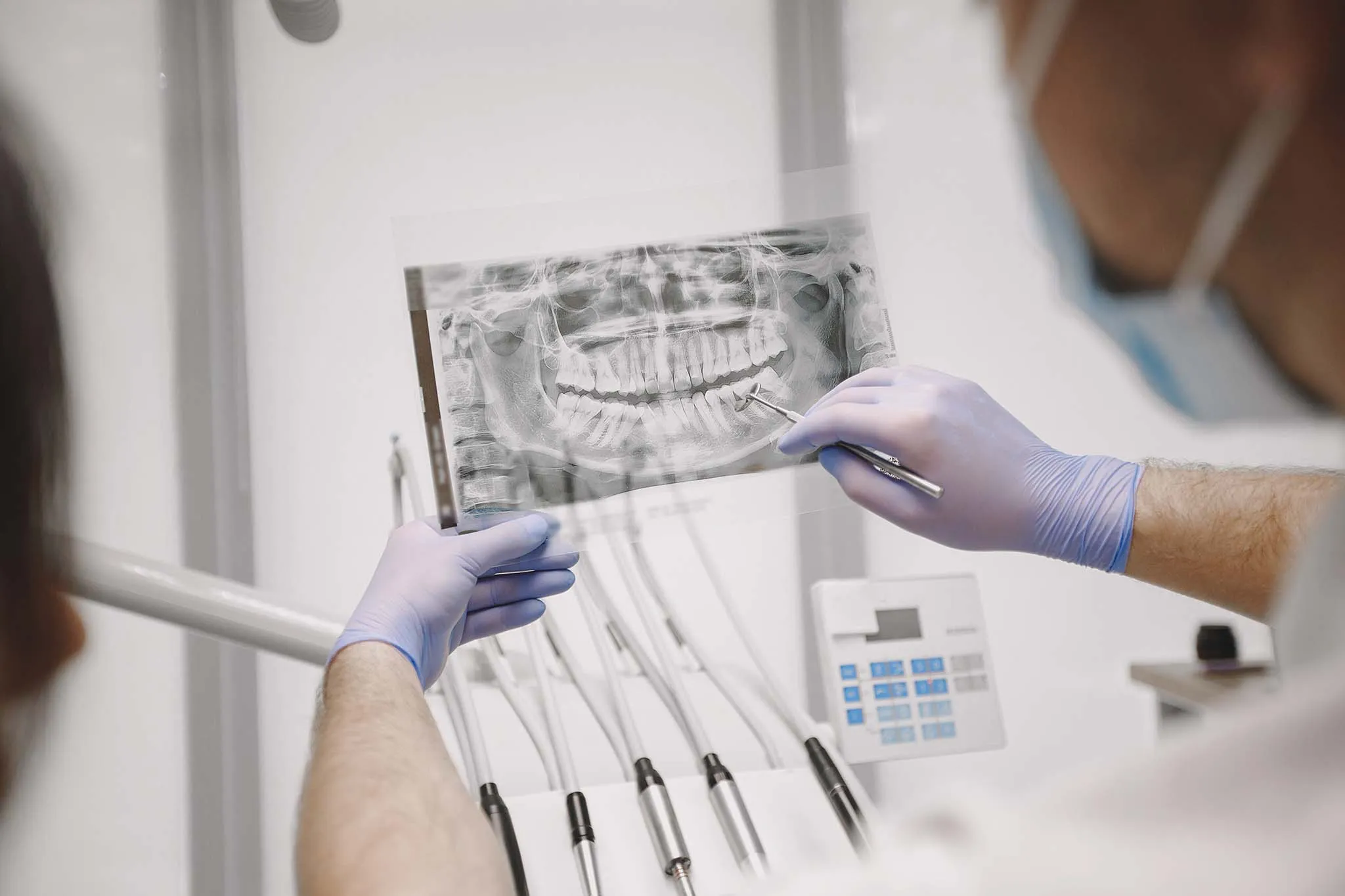
It starts with a panoramic X-ray, which shows all four wisdom teeth at once along with the angle they sit at, how much room there is behind the second molars, how far the roots have formed, and how close they lie to the nerve in the lower jaw. That single image answers most of the question.
We then look at what the tooth is actually doing: whether it is decayed or has decayed the tooth in front, whether the gum around it is repeatedly inflamed, whether it can be cleaned, and whether it is causing pain. A symptom-free tooth in a good position is usually left alone and monitored.
Where the tooth is removed depends on how it sits. A wisdom tooth that has erupted normally is generally a straightforward extraction. One that lies deep in the bone, sits at a sharp angle, or has roots close to the nerve is surgical, and those cases are commonly handled by an oral and maxillofacial surgeon. We will tell you which category you are in after the X-ray, and arrange the referral if that is the right route rather than attempt something that belongs elsewhere.
.jpeg)

Wisdom teeth are the only teeth that are not fully formed when you are born, and some people never develop them at all - anywhere from one to all four can simply be missing, which is completely normal.
This is the differentiator paragraph copy. This is the differentiator paragraph copy. This is the differentiator paragraph copy. This is the differentiator paragraph copy.

See real patient success stories.
A panoramic image shows all four at once - their angle, the space behind your molars and how close the roots sit to the nerve.
An angled wisdom tooth commonly decays the healthy second molar beside it. Finding that early can save the more valuable tooth.
A straight, cleanable wisdom tooth that bites properly is a normal molar. We monitor those rather than remove them.
We take a single panoramic image showing all four wisdom teeth, the space available, root formation and the position of the nerve in the lower jaw.
We show you the image and explain what each tooth is doing - crowding, partly erupted, decayed, or sitting safely - and whether removal is warranted.
Straightforward, fully erupted teeth are usually removed here. Deeply impacted or angled teeth are referred to an oral surgeon, and we arrange that for you.

Late teens to early twenties is when they typically arrive and when the roots are still forming, so that is the usual point to assess them. It is worth having them reviewed at that stage even if nothing hurts, because the X-ray shows problems that have not yet produced symptoms.
Expect swelling and tenderness that peak in the first couple of days and then settle, along with a soft-food diet for a short period. You will be given specific aftercare instructions, including how to protect the clot and what to avoid. Surgical removals generally take longer to settle than straightforward ones.
Common signs are aching or pressure at the very back of the jaw, gum that is swollen or sore around a partly erupted tooth, food trapping behind the last molar, a bad taste that keeps returning, or difficulty opening fully. Some problem teeth cause no symptoms and are only found on an X-ray.
It depends on the tooth. A wisdom tooth that has erupted normally is usually a straightforward extraction we can carry out. Teeth that sit deep in the bone, at a sharp angle, or with roots close to the nerve are surgical cases and are commonly handled by an oral and maxillofacial surgeon - we will tell you which yours is after the X-ray, and refer you if that is the better route.
No. A wisdom tooth that has come through straight, bites against the tooth above or below it and can be brushed properly is a normal molar. Removal is considered when a tooth is decayed, repeatedly inflamed, impossible to clean, damaging the tooth in front, or causing pain.

© Lush Dental Heights
Website by Wonderist Agency | Privacy Policy
