.png)
.png)
.png)

Hours
Mon: Closed
Tues: 9:00AM-5:00PM
Wed: 7:00AM-5:00PM
Thurs: 9:00AM-5:00PM
Fri: 8:00AM-4:00PM
Sat: 8:00AM-3:00PM

Jawbone is maintained by the tooth root pressing into it. Take the tooth away and that stimulus disappears, so the bone begins to shrink - most noticeably in the first months after an extraction, and slowly for years afterward. It is the reason a gap that has been there a long time often looks sunken.
The practical consequence usually surfaces later, when someone decides to replace the missing tooth and is told there is not enough bone left to place an implant. A graft is what closes that gap, and placing one at the time of the extraction often prevents the problem arising at all.
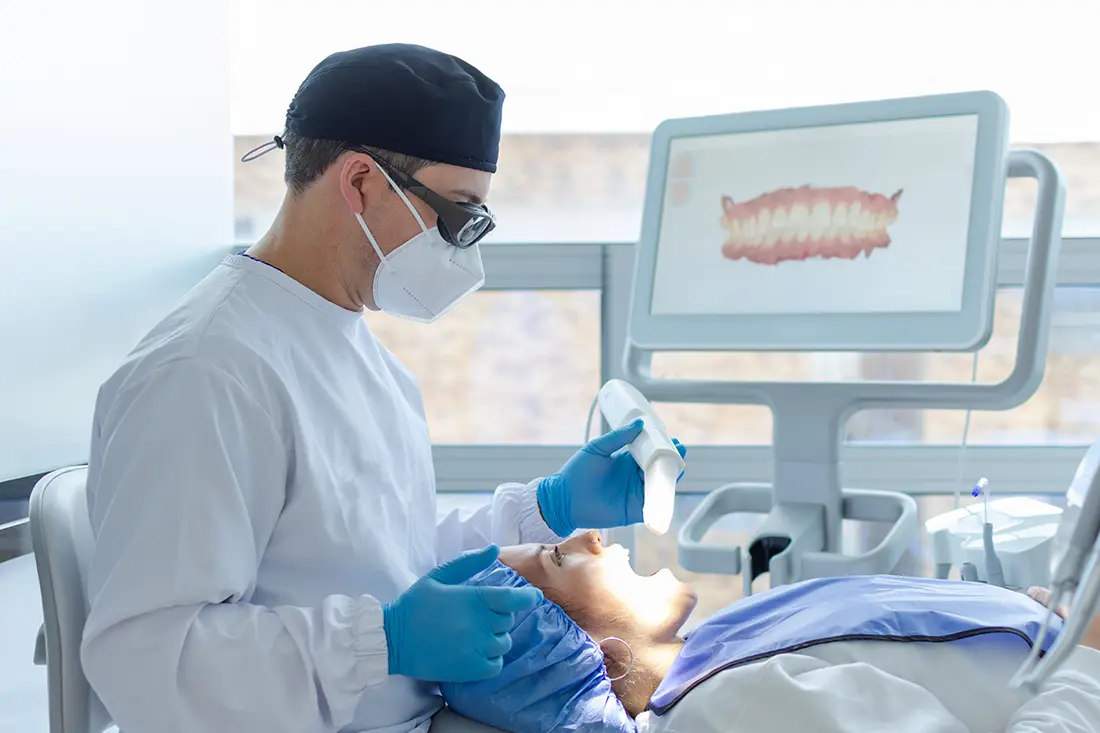
There are two common situations. The first is ridge preservation: grafting material is placed into the socket at the same appointment as an extraction, which limits how much the ridge collapses and keeps a future implant straightforward. The second is building bone back where a tooth has been missing for a while and the site is now too thin or too shallow for an implant to be placed safely.
We assess the site with imaging to measure how much bone is present and what sits nearby - the nerve in the lower jaw, or the sinus above the upper back teeth. Grafting material is then placed and covered, and the body gradually replaces it with its own bone. That healing takes months rather than weeks, which is why implant treatment involving a graft is planned as a sequence of appointments rather than a single visit.
Not every case belongs in a general practice. Larger reconstructions and sinus lifts are frequently handled by a periodontist or oral surgeon, and where yours is one of those we will say so and refer you rather than stretch the treatment to fit.


The jawbone loses the most width in the first six months after a tooth is removed - which is why placing a graft at the time of the extraction is often easier than rebuilding the bone years later.
This is the differentiator paragraph copy. This is the differentiator paragraph copy. This is the differentiator paragraph copy. This is the differentiator paragraph copy.

See real patient success stories.
An implant needs solid bone to anchor into. Grafting rebuilds a site that has become too thin or too shallow to take one safely.
Placing a graft into the socket at the time of removal limits how much the bone collapses and keeps your options open later.
Bone loss along a long-standing gap can make the area look sunken. Maintaining the ridge helps preserve the contour.
We use imaging to measure how much bone is present and identify what sits nearby - the nerve in the lower jaw, or the sinus above the upper back teeth.
The area is numbed and grafting material is placed into the socket or onto the thin area, then covered and protected so it stays where it is needed.
Your body gradually replaces the graft with its own bone over several months. We re-image the site before placing an implant to confirm it is ready.

Larger reconstructions and sinus lifts are frequently handled by a periodontist or oral surgeon. We assess the site, tell you plainly what it needs, and refer you when the procedure belongs with a specialist rather than stretching the treatment to fit the practice.
Several types are used, including processed donor and synthetic materials, and in some cases bone taken from elsewhere in your own jaw. Which is appropriate depends on the site and how much volume is needed - we will go through the specific material planned for your case beforehand.
Often, yes. The jawbone loses the most width in the first months after a tooth is removed, so placing a graft into the socket at that appointment limits the collapse. Rebuilding bone years later is a bigger undertaking than preserving it at the outset.
Months rather than weeks - your body is replacing the graft material with its own bone. The exact time depends on the size of the graft and the site. We re-image before placing an implant to confirm the bone is ready rather than working to a fixed calendar.
Not necessarily. Many sites have plenty of bone and an implant can be placed directly. A graft is needed when imaging shows the ridge is too thin or too shallow to hold an implant securely. The assessment tells us before anything is scheduled.

© Lush Dental Heights
Website by Wonderist Agency | Privacy Policy
