Hours
Mon: Closed
Tues: 9:00AM-5:00PM
Wed: 7:00AM-5:00PM
Thurs: 9:00AM-5:00PM
Fri: 8:00AM-4:00PM
Sat: 8:00AM-3:00PM


The short answer: You may need a night guard for teeth grinding if you wake with a sore jaw or headaches, your teeth look worn or chipped, or someone hears you grind at night. A night guard won’t stop the habit, but it takes the force instead of your teeth. A dental exam can confirm whether grinding is the cause.
Do you wake up with a sore jaw, a dull headache, or teeth that feel tender for no clear reason? You might be grinding or clenching your teeth while you sleep. Most people who grind have no idea they’re doing it until a partner hears it or a dentist spots the wear.
In this guide, we explain the signs of grinding, what causes it, how a night guard protects your teeth, and how custom guards compare with store-bought ones. At Lush Dental Heights, Dr. Pasha Noorian provides custom night guards in Houston Heights, and we can help you work out whether you need one.
Bruxism is the medical term for grinding or clenching your teeth. It can happen during the day, often when you’re focused or stressed, or at night while you sleep. Nighttime grinding is the kind a night guard is made for.
It’s common, although estimates vary a lot from study to study. A 2019 review of 41 systematic reviews in the Journal of Oral Rehabilitation found sleep grinding in roughly 1% to 15% of adults and daytime clenching in 22% to 30%, with higher rates of sleep grinding reported in children and teens.
Because it happens while you’re asleep, nighttime grinding can go on for years without you noticing. Over months and years, that repeated pressure can flatten, chip, and crack teeth.
The most common signs are a sore jaw or a headache when you wake up, teeth that look worn, and a partner who hears you grinding. Watch for:
If several of these sound familiar, a dental exam can confirm whether grinding is the cause. We look for the flattened, polished wear spots that grinding leaves behind, and we check your jaw joints and muscles, too.
Grinding can also leave teeth feeling sore. If a tooth suddenly starts to hurt, our guide Is a Sudden Toothache a Dental Emergency? explains when to call right away.

There’s often no single cause. Common triggers include:
A night guard protects your teeth by taking the force of grinding so your enamel doesn’t. A night guard, sometimes called a night mouth guard or occlusal guard, is a removable appliance made to fit over your teeth, which you wear while you sleep. It doesn’t stop the urge to grind, but it changes what happens when you do:
That last point matters if you’ve had restorative or cosmetic work: grinding can chip porcelain veneers and wear down crowns, so a night guard is part of looking after them. Protecting your teeth now can also help you avoid more involved and costly treatment later.
For most people who grind at night, a custom night guard from a dentist is the better choice. The ADA’s MouthHealthy site says a custom guard made from a mold your dentist takes gives the closest, most comfortable fit, while guards sold online and in stores may not protect as well. Here’s how they compare.
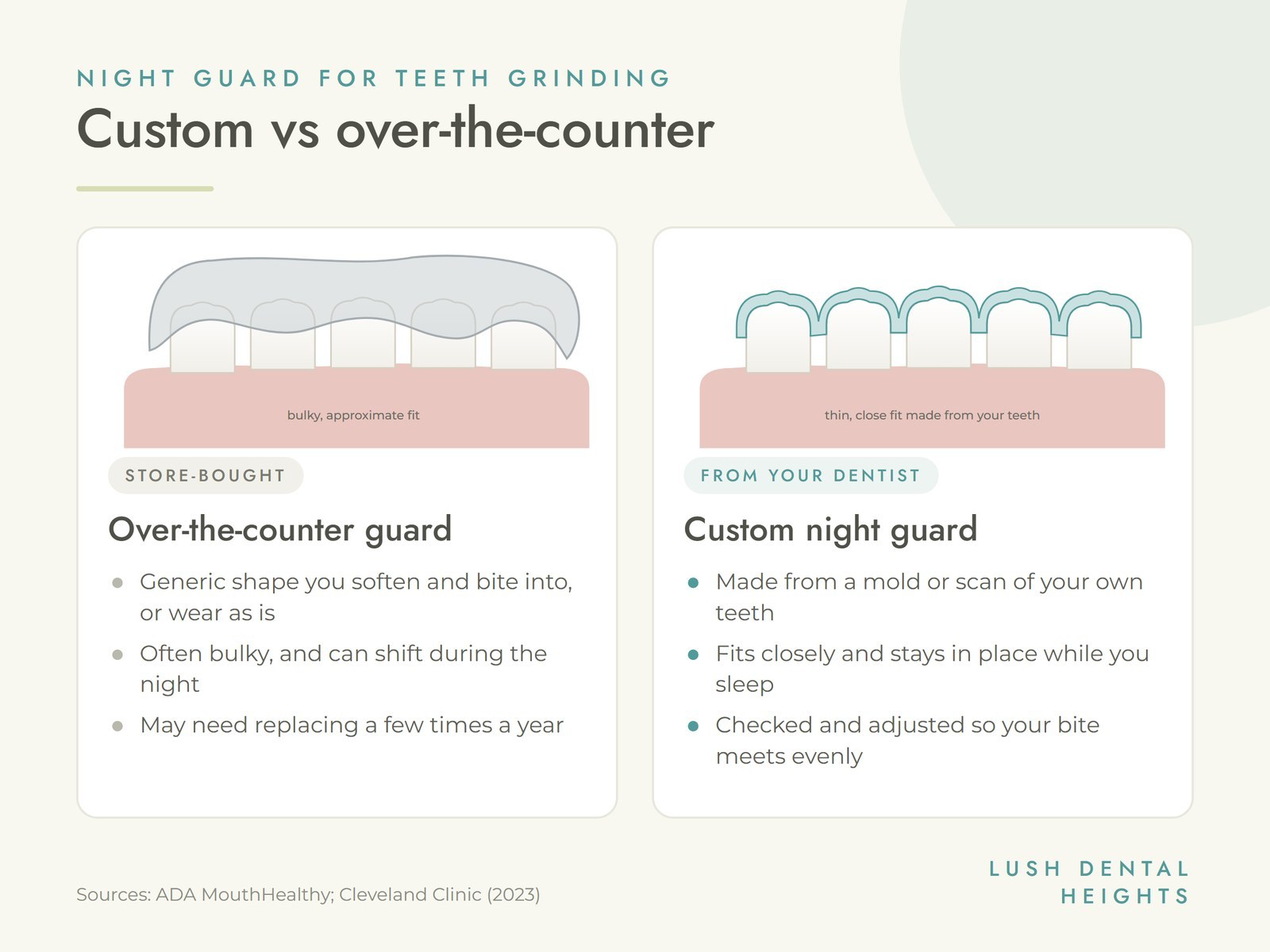
Custom guards also vary in thickness and material, from thinner, softer guards to firmer ones. Which suits you depends on how heavily you grind and how your teeth meet, and that’s one reason the exam comes first.
A store-bought guard can work as a short-term stopgap, but a lab-made guard fits and lasts in a way an over-the-counter guard does not. Because you’ll wear it every night, comfort makes a big difference to whether you actually keep using it.
One more thing: a sports mouth guard isn’t a substitute. It’s built to absorb a single hard impact, not hours of clenching, and its extra cushioning usually isn’t comfortable for sleep.
Making a custom night guard takes three steps, and your guard is fitted at a follow-up visit once the dental lab has made it:
Think you might be grinding at night? See how custom night guards work at Lush Dental Heights.
Explore Night GuardsJaw pain, clicking, or headaches alongside grinding can point to a TMJ problem, which calls for a closer look at the jaw joint as well as the teeth. For most people, the first step is conservative and reversible: a custom splint worn at night that takes the load off the joint and muscles.
We also look at everyday contributors, like daytime clenching, chewing habits, and posture at a desk. If symptoms don’t settle, or the joint itself appears damaged, we’ll say so and refer you to an oral and maxillofacial specialist. You can read more about TMJ treatment at our office.
It can be. As we noted above, grinding and sleep apnea often show up in the same person. So if you snore, wake up unrefreshed, or feel tired during the day, mention it at your visit.
A night guard isn’t a sleep apnea treatment. We also offer sleep apnea appliances, which work differently: they hold the lower jaw slightly forward while you sleep to help keep the airway open. We don’t diagnose sleep apnea, though. Diagnosis comes from a physician, usually after a sleep study, and if your symptoms suggest apnea, we’ll help you get referred.
Not always. Children often grind their teeth, and many outgrow it by adolescence. In kids, grinding usually isn’t the result of stress, according to the ADA.
Because a child’s teeth and jaws are still growing, a guard isn’t automatically the answer. At your child’s dental checkups, we talk with you about what’s changing, including grinding, and let you know whether a guard makes sense or whether watching it is the better choice. If a child does wear a guard, it may need replacing more often as their mouth grows.
A few simple habits keep a night guard clean and help it last:
If you’ve been waking up with jaw pain, headaches, or sensitive teeth, you don’t have to put up with it. At an exam, we’ll find out what’s going on and, if grinding is the cause, talk you through a custom night guard and how it’s made.
Many dental plans help pay for a custom night guard when it’s prescribed for grinding. Plans differ, so we’ll help you check your benefits before we make yours.
We keep visits calm and unhurried, and nobody gets a lecture here. We welcome patients from across the Heights, Garden Oaks, Woodland Heights, and Rice Military.
Call Lush Dental Heights at (713) 487-9618 or visit us at 5307 N Main St, Ste. 200, Houston, TX 77009 to book your visit.
Common signs include a sore jaw in the morning, headaches, worn or chipped teeth, and a partner hearing you grind. A dental exam can confirm whether grinding is the cause and whether a night guard is right for you.
For most people, yes. Custom guards are made from a mold of your teeth, so they fit closely, stay in place, and last longer. Store-bought guards are often bulky and can shift during the night.
No. A night guard doesn’t stop the habit itself, but it protects your teeth from the damage and can ease jaw pain. We’ll also look at what may be causing your grinding.
With good care, a custom night guard can last several years, though heavy grinding wears one out faster. Store-bought guards are less durable and may need replacing a few times a year.
Sometimes. Grinding is common in children and often fades as they grow. Because a child’s teeth and jaws are still changing, we’ll check whether a guard is needed or whether simply watching it is the better choice.
It’s not a good substitute. A sports guard is built to absorb a hard impact, not hours of clenching, and its extra cushioning usually isn’t comfortable for sleep.
No. A night guard protects your teeth from grinding. A sleep apnea appliance holds your lower jaw slightly forward to help keep your airway open, and it’s used after a physician has diagnosed sleep apnea.

© Lush Dental Heights
Website by Wonderist Agency | Privacy Policy
