Hours
Mon: Closed
Tues: 9:00AM-5:00PM
Wed: 7:00AM-5:00PM
Thurs: 9:00AM-5:00PM
Fri: 8:00AM-4:00PM
Sat: 8:00AM-3:00PM


Do you feel like your gums steal the show when you smile? You’re not alone. Plenty of people quietly hide their smile in photos because they see more gum than teeth. The good news is that gummy smile treatment has come a long way, and the right fix depends on what’s causing it.
The short answer: Gummy smile treatment depends on the cause. Extra gum tissue is usually reshaped with gum contouring, short or worn teeth can be lengthened with veneers, an overactive upper lip may be relaxed with Botox, and a long upper jaw may need jaw surgery. Many people have more than one cause, so an exam comes first.
In this guide, we explain the most common causes, walk through your treatment options from the simplest to the most involved, and share what to expect at Lush Dental Heights. Our goal is simple: a smile that feels balanced, natural, and completely you.
A gummy smile is a smile that shows more gum tissue above the upper teeth than you’d like. Dentists also call it excessive gingival display.
There’s no strict cutoff. A 2023 review in the journal Cureus describes more than 2 to 3 millimeters of gum showing when you smile as a gummy smile, and it estimates that 10.5% to 29% of people have one. What matters most is how you feel about your smile.
It’s worth saying clearly: a gummy smile is not a health problem on its own. Plenty of people have one and love their smile. Treatment is a personal, cosmetic choice. But if your gums make you self-conscious, there are often simple, conservative ways to bring your smile into balance.
Proportion matters too, not just the amount of gum. A smile generally reads as balanced when the gumline of the two front teeth sits at roughly the same height as the canines, with the small teeth between them slightly lower. That’s why a single uneven tooth can stand out so much.
Getting the cause right is the most important step, because each cause has a different fix. The most common reasons include:
Many people have more than one of these at the same time. That’s why a careful assessment matters before choosing any treatment.

Here are the main options, starting with the most conservative. Some are done in a general dental office like ours, and some need a referral to another provider.
When the cause is extra gum tissue covering teeth of a normal length, gum contouring is often the simplest answer. A small amount of gum tissue is removed or reshaped along a carefully planned line, so more of each tooth shows and the gumline looks even.
What to expect at Lush Dental Heights:
A big advantage is that your healthy teeth stay untouched. Many people assume they need veneers or crowns to make teeth look longer, when adjusting the gum tissue alone is often the more conservative fix.
You may also see “laser gum contouring” or “gummy smile laser treatment” online. As Cleveland Clinic explains, the extra tissue can be removed with a scalpel or a handheld laser. Either way, the aim is the same: an even gumline that suits your smile.
Think extra gum tissue is behind your smile? See how gum contouring works at Lush Dental Heights.
Explore Gum ContouringCrown lengthening overlaps with gum contouring, but it goes a step further. Along with reshaping the gum, it may also adjust the bone underneath, usually to expose more of the tooth, for example before a crown. The American Academy of Periodontology notes that it can be done on one tooth or on several to even out the gumline.
If your case calls for this bone-level procedure, we’ll refer you to a periodontist (a gum specialist).
If your teeth are short because of wear or their natural shape, porcelain veneers can add length and improve their shape and shade. A single veneer can lengthen a worn edge, close a small gap, and brighten a stained tooth in the same treatment.
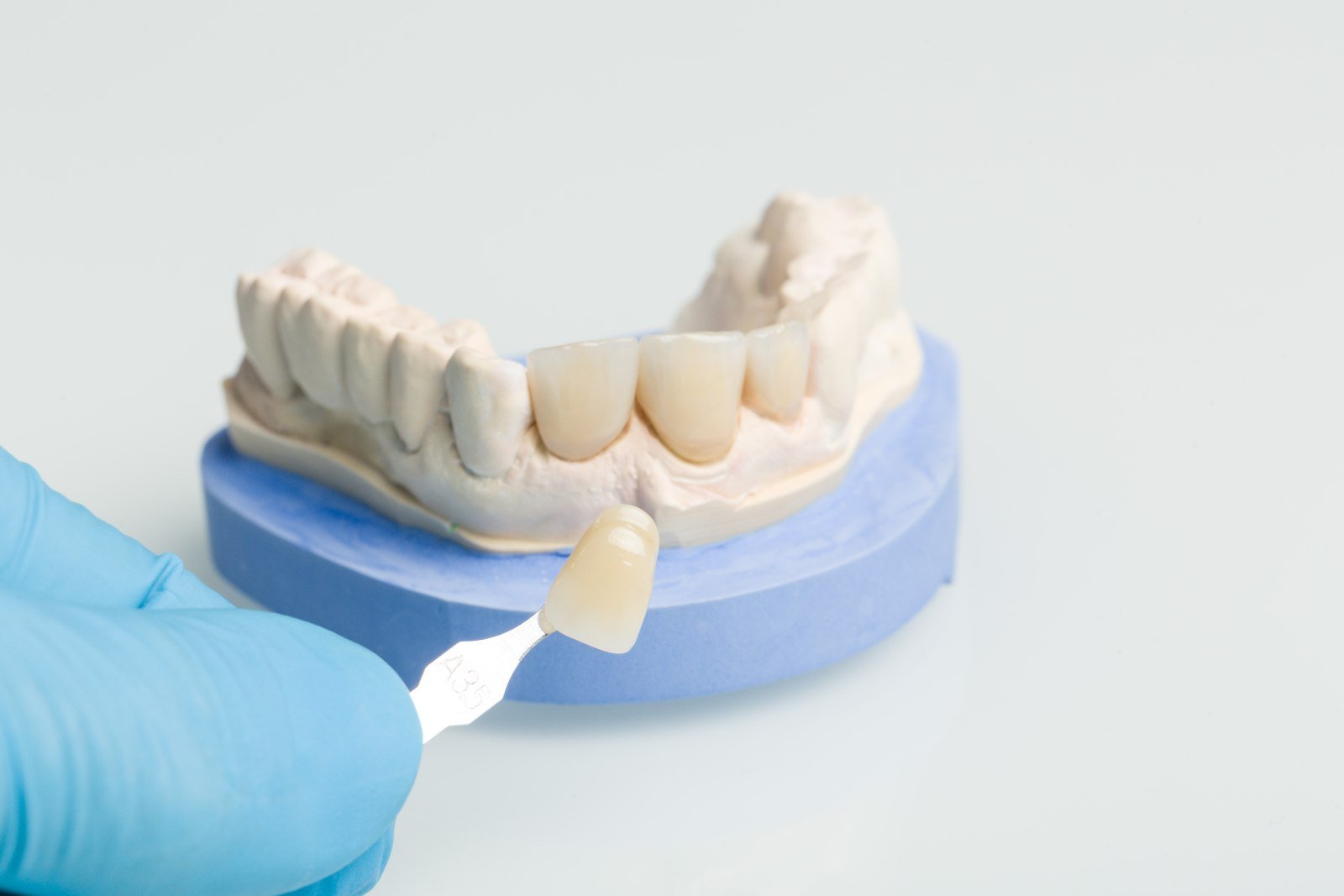
Veneers are often planned together with gum contouring. In that case, we let the gum tissue settle fully before your final veneers are made, so the edges sit exactly where they should. If crooked teeth are part of the picture too, our guide Can Porcelain Veneers Fix Crooked Teeth Without Braces? explains where veneers stop and aligners start.
Sometimes the position of the teeth plays a part in how much gum shows. In those cases, straightening or repositioning the teeth may help as part of a wider plan. Dr. Noorian provides Invisalign clear aligners and can tell you whether they could be part of your solution. Not every gummy smile can be improved this way, and your exam will show whether tooth position is part of yours.
You may have read about Botox for a gummy smile. When an overactive upper lip is the main cause, small injections of botulinum toxin (Botox) can relax the muscle that lifts the lip, so less gum shows. The effect is temporary: the Cureus review puts it at about four to six months, so it has to be repeated to keep the result.
Another option for a lip-driven gummy smile is lip repositioning, a minor surgical procedure that limits how high the upper lip lifts when you smile. It’s generally considered for milder cases.
Neither of these is part of gum contouring. A gummy smile caused by the way the lip moves needs a different approach from gum reshaping, and your assessment will show whether that applies to you.
If a gummy smile comes mainly from the position of the upper jaw, the usual fix is jaw surgery (orthognathic surgery) with an oral and maxillofacial surgeon, often combined with orthodontics. This is a bigger decision, and it’s only right for some people. Your assessment will make clear whether this applies to you.
The right treatment is the one that matches your cause, and many people need a combination. A gummy smile assessment usually looks at five things:
Here’s how the main options compare:
| Treatment | Best suited to | Good to know |
|---|---|---|
| Gum contouring | Extra gum tissue covering teeth of a normal length | Usually one visit; the result is generally stable |
| Crown lengthening | Gum and bone that sit low on the teeth | Also reshapes bone; done by a periodontist |
| Veneers or crowns | Short, worn, or uneven teeth | Porcelain veneers typically last 15 to 20 years with care |
| Clear aligners or braces | Teeth whose position adds to the gum display | Helps only some cases, as part of a wider plan |
| Botox | An overactive upper lip | Temporary, about four to six months per treatment |
| Jaw surgery | An upper jaw that is longer from top to bottom | Major surgery, usually combined with orthodontics |
Treat the swelling first. If your gums look swollen, red, or puffy, the cause may be inflammation rather than extra tissue, and the first step is getting your gums healthy, not reshaping them.
Healthy gums don’t bleed when you brush or floss, so bleeding is a sign of inflammation. Professional cleanings and gum disease treatment, such as a deep cleaning below the gumline, can settle the swelling, and sometimes that alone makes a visible difference to how your smile looks. Cosmetic reshaping, if you still want it, comes after.
Your visit starts with a conversation about what you’d like to change. Dr. Pasha Noorian, DMD, will examine your teeth and gums, look at your smile from every angle, and explain what’s causing the gum display. From there, you’ll get a clear plan, whether that’s a single gum contouring visit or several treatments planned together as a smile makeover.
Treatment done purely for appearance is rarely covered by dental insurance, but we accept most insurance plans and are happy to help you check your coverage. Financing is available through Cherry, CareCredit, Sunbit, and HFD, pending approval.
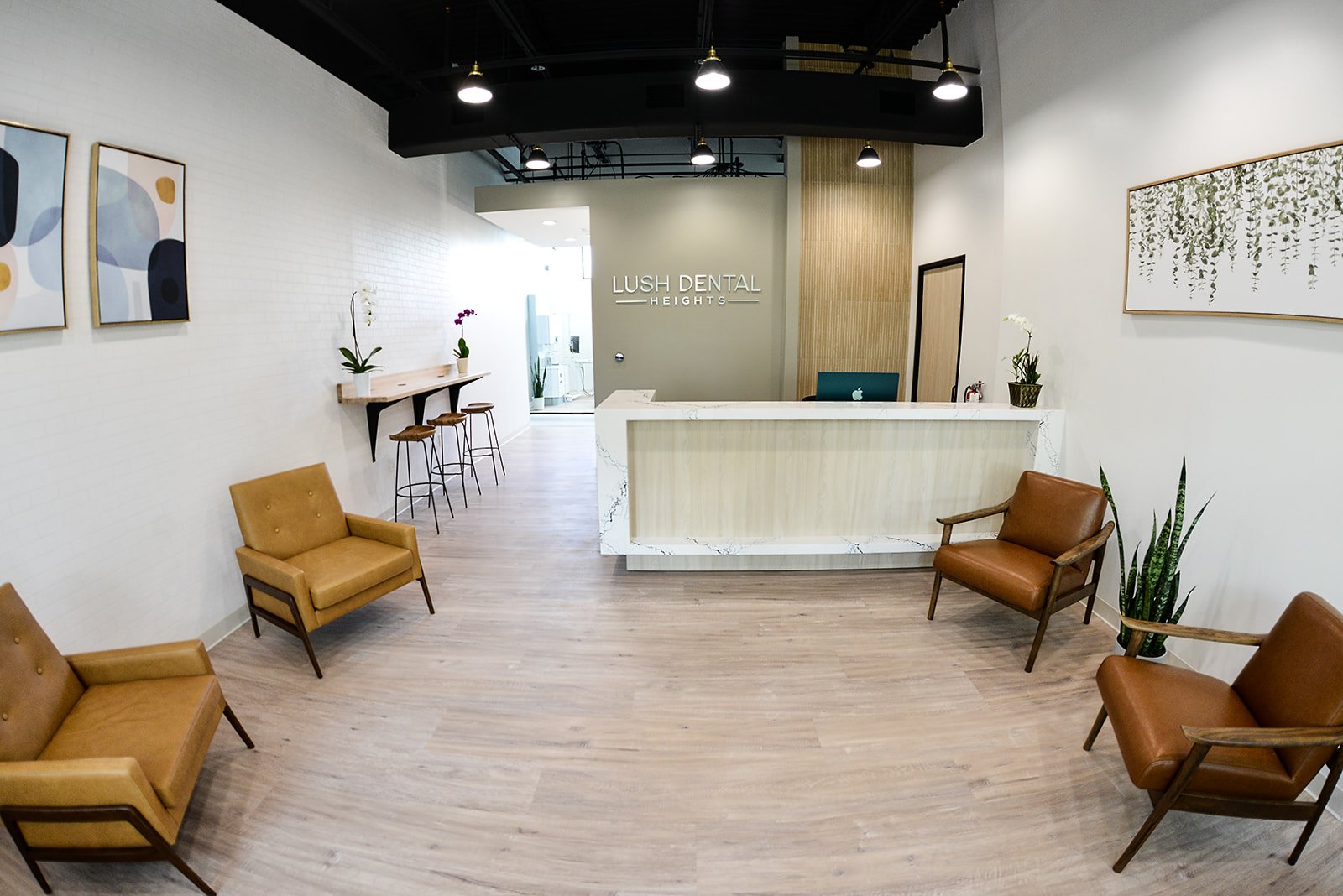
Call (713) 487-9618 or request an appointment online to book your visit. We’re at 5307 N Main St, Suite 200, Houston, TX 77009, and we welcome patients from across the Heights, Garden Oaks, Woodland Heights, and Rice Military.
Sometimes. If the cause is swollen gums, getting your gums healthy may help. If an active lip is the cause, Botox can offer a temporary improvement. When extra gum tissue is the cause, gum contouring is a minor, in-office procedure done under local anesthetic, usually in one visit.
The area is numbed with local anesthetic, so the procedure itself isn’t painful. Afterward, expect some tenderness for a few days and stick to softer foods while the tissue settles.
When healthy gum tissue is reshaped for cosmetic reasons, the result is generally stable. At your assessment, we’ll tell you if your case is one where some rebound is likely.
It’s temporary. A 2023 review in the journal Cureus puts the effect at about four to six months, so the treatment has to be repeated to keep the result.
Only when short or worn teeth are part of the cause. Veneers can make teeth longer, so less gum shows in proportion, but they don’t change extra gum tissue, an active lip, or the jaw. They’re often planned together with gum contouring.
Sometimes, as part of a wider plan, when the position of the teeth adds to how much gum shows. Aligners can’t change gum tissue, lip movement, or the size of the jaw, so they help only some cases.
Not on its own. A gummy smile is usually about proportions, and treating it is a cosmetic choice. The exception is gums that look swollen, red, or puffy, or that bleed when you brush, which points to inflammation that should be treated first.
It depends on the cause, and many people have more than one. An exam lets us measure how much tooth and gum shows, check your gum health, and look at how your lip and teeth move when you smile. Then we recommend the most conservative option that fits.

© Lush Dental Heights
Website by Wonderist Agency | Privacy Policy
