Hours
Mon: Closed
Tues: 9:00AM-5:00PM
Wed: 7:00AM-5:00PM
Thurs: 9:00AM-5:00PM
Fri: 8:00AM-4:00PM
Sat: 8:00AM-3:00PM


If you are thinking about straightening your teeth, the first question is usually about money. Invisalign cost can vary by thousands of dollars from one person to the next, which makes it hard to budget when every quote looks different.
The short answer: In the United States, clear aligners like Invisalign cost about $5,108 on average without insurance, according to CareCredit, and fees can range from $1,800 to $8,100 depending on where you live. The Texas average in the same study was $3,967. Your own price depends mostly on how much your teeth need to move and on what the fee includes.
This guide explains what pushes the number up or down, how insurance and HSA or FSA funds can help, and what to ask before you say yes. At Lush Dental Heights in Houston, Dr. Pasha Noorian gives you the full figure for your case at a free Invisalign consultation.
There is no single price for Invisalign. Align Technology, the company that makes the aligners, says on its Invisalign cost page that each doctor sets the fee based on how complex your case is and how many aligners you need. Align also says that, in most cases, the cost of Invisalign is comparable to the cost of braces.
For a national benchmark, CareCredit’s clear aligner cost guide reports an average of $5,108 without insurance, based on a 2023 cost study conducted for Synchrony, the company behind CareCredit. State averages ranged from $3,668 in Utah to $6,516 in Rhode Island, and the Texas average was $3,967.
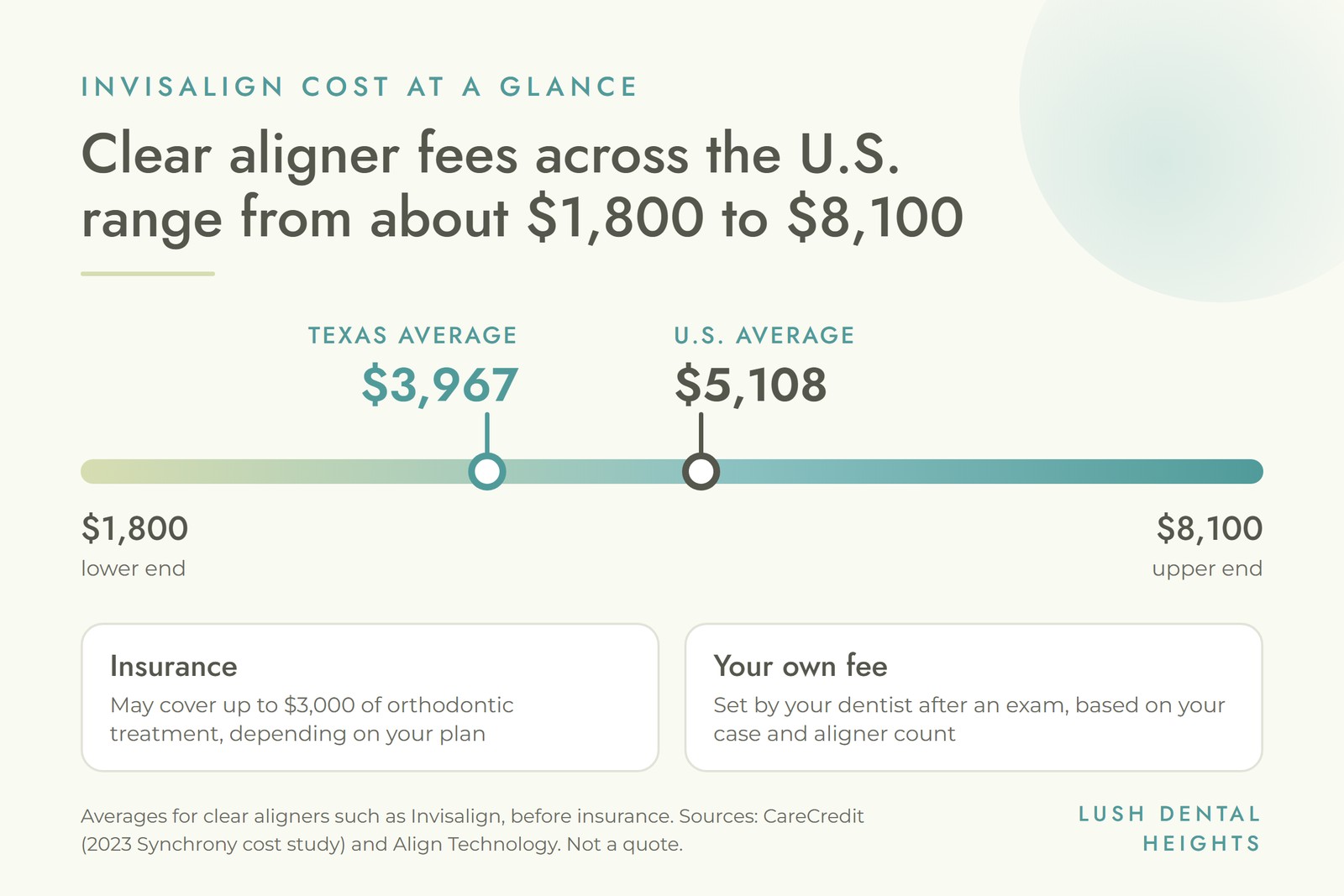
Keep in mind that these are averages for clear aligners in general, not quotes. They are useful for a first budget, but the number that matters is the one you get after an exam and a scan of your teeth.
Here is how the average Invisalign cost, measured across all clear aligners, compares with braces and retainers in CareCredit’s national cost data:
| Treatment | U.S. average | Good to know |
|---|---|---|
| Clear aligners (like Invisalign) | $5,108 | Range $1,800–$8,100 |
| Clear aligners in Texas | $3,967 | Same 2023 study |
| Metal braces | $6,343 | For comparison |
| Ceramic braces | $5,834 | For comparison |
| Clear plastic retainer | $181 | Often needed afterward |
Source: CareCredit, based on 2023–2024 Synchrony cost studies. Averages exclude insurance.
Two people can pay very different amounts for Invisalign at the same office. These are the factors that usually make the biggest difference.
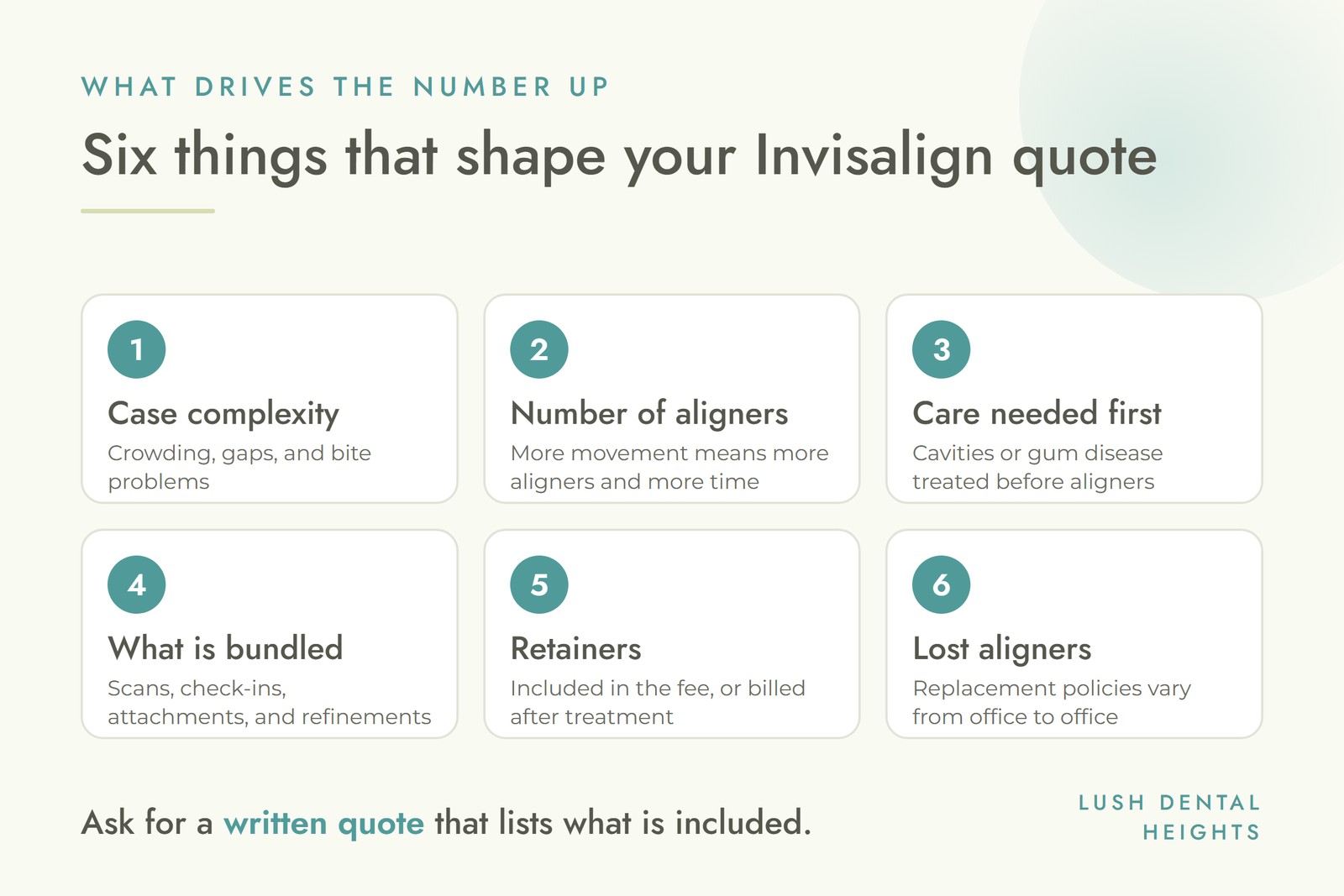
Closing a small gap or straightening a few crowded front teeth takes less work than correcting an overbite, an underbite, or a crossbite. More complex movements need more planning, more aligners, and more check-ins. Some severe bite problems are still better treated with braces, and your dentist should tell you that at the start.
Your aligners are made as a series, and each one moves your teeth a small, planned amount. The more your teeth need to move, the more aligners your case takes and the longer treatment lasts. Many cases finish in 12 to 18 months, while minor corrections can be quicker.
Aligners should go on healthy teeth and gums. If you have untreated decay or gum disease, it is handled first, with dental fillings or gum disease treatment, and that care is usually billed separately. If it has been a while since your last checkup and cleaning, that may come first, too.
Some offices quote one fee that covers everything from the first scan to the last check-in. Others list items separately. Things that can be bundled or billed on their own include:
Two quotes only compare fairly when they cover the same things, so ask for a written list.
Once your teeth are straight, a retainer keeps them from drifting back. CareCredit’s cost list puts the average clear plastic retainer at $181, and bonded retainers at $344.
Ask whether your first retainer is included and what replacements cost later. If you grind your teeth, ask about a night guard for after treatment, too.
Replacing a lost or damaged aligner may cost $75 to $300, according to CareCredit, and some dentists include a set number of replacements in the fee. Wearing your aligners as directed, usually 20 to 22 hours a day, also keeps treatment on schedule, because skipped days add time at the end.
Often, yes. Align offers Invisalign in several packages, and its product guide for dentists describes the Invisalign Express package as a cost-effective option for smiles that need only minor corrections, with up to 7 aligners. Its Lite and Moderate packages allow up to 14 and 20 aligners, and its Comprehensive package has no set limit.
Because fewer aligners usually mean a lower fee, a minor case, such as teeth that have shifted after braces, often costs less than full treatment. Align does not publish consumer prices for any package, though, and your dentist recommends the right one only after looking at your scan.
Many dental plans treat Invisalign the same way they treat braces. If your plan includes orthodontic benefits, it may pay a share of the fee, up to a set dollar limit. Align says insurance may help cover up to $3,000 of orthodontic treatment, and in 2021 OrthoFi data it cites, the average coverage amount was $1,772.
A few terms decide how much you actually get back:
Here is a simple example. Say your fee is $5,000, and your plan pays 50% of orthodontic treatment up to a $1,500 lifetime maximum. Half the fee would be $2,500, but the maximum caps the payment, so the plan pays $1,500, and you owe $3,500.

Your own numbers will differ, which is why a pre-treatment estimate from your insurer is worth asking for before you start. At Lush Dental Heights, we are in-network with a wide list of insurers, and we are happy to help you check your coverage. You can also start with the insurance check on our patient resources page.
Without insurance, you pay the full fee, so the national average of about $5,108 and the Texas average of $3,967 are a fair starting point for planning. That does not mean you have to pay it all at once. Common ways to spread or lower the cost include:
Usually, yes. Align says you can use a health savings account (HSA) or flexible spending account (FSA) to pay for Invisalign with tax-free dollars. The IRS’s Publication 502 lists braces among the dental treatments that count as medical expenses, while cosmetic services like teeth whitening do not.
Check the rules and deadlines with your plan administrator, since every account works a little differently.
Not usually. When people compare Invisalign braces cost with regular braces, they are really comparing two different tools, since Invisalign uses clear, removable aligners instead of brackets and wires. On price, Align says the two are comparable in most cases.
CareCredit’s averages put metal braces at $6,343, ceramic braces at $5,834, and clear aligners at $5,108, though each figure reflects a different mix of cases.
The better question is which one suits your teeth. Aligners are removable and easier to keep clean, while braces can still be the better tool for complex bite corrections. If you are mainly unhappy with the shape or color of a few teeth, it is also worth reading whether porcelain veneers can fix crooked teeth without braces.
Invisalign tends to suit adults and teens with mild to moderate crowding, spacing, or bite problems, healthy teeth and gums, and the commitment to wear aligners 20 to 22 hours a day. It may not be the right fit if you:
We cover this in more depth in Am I a good candidate for Invisalign?
Bring this checklist to your consultation, so you can compare quotes on equal terms:
Our post on what to expect at your first Invisalign consultation walks through the visit itself, from the scan to the treatment plan.
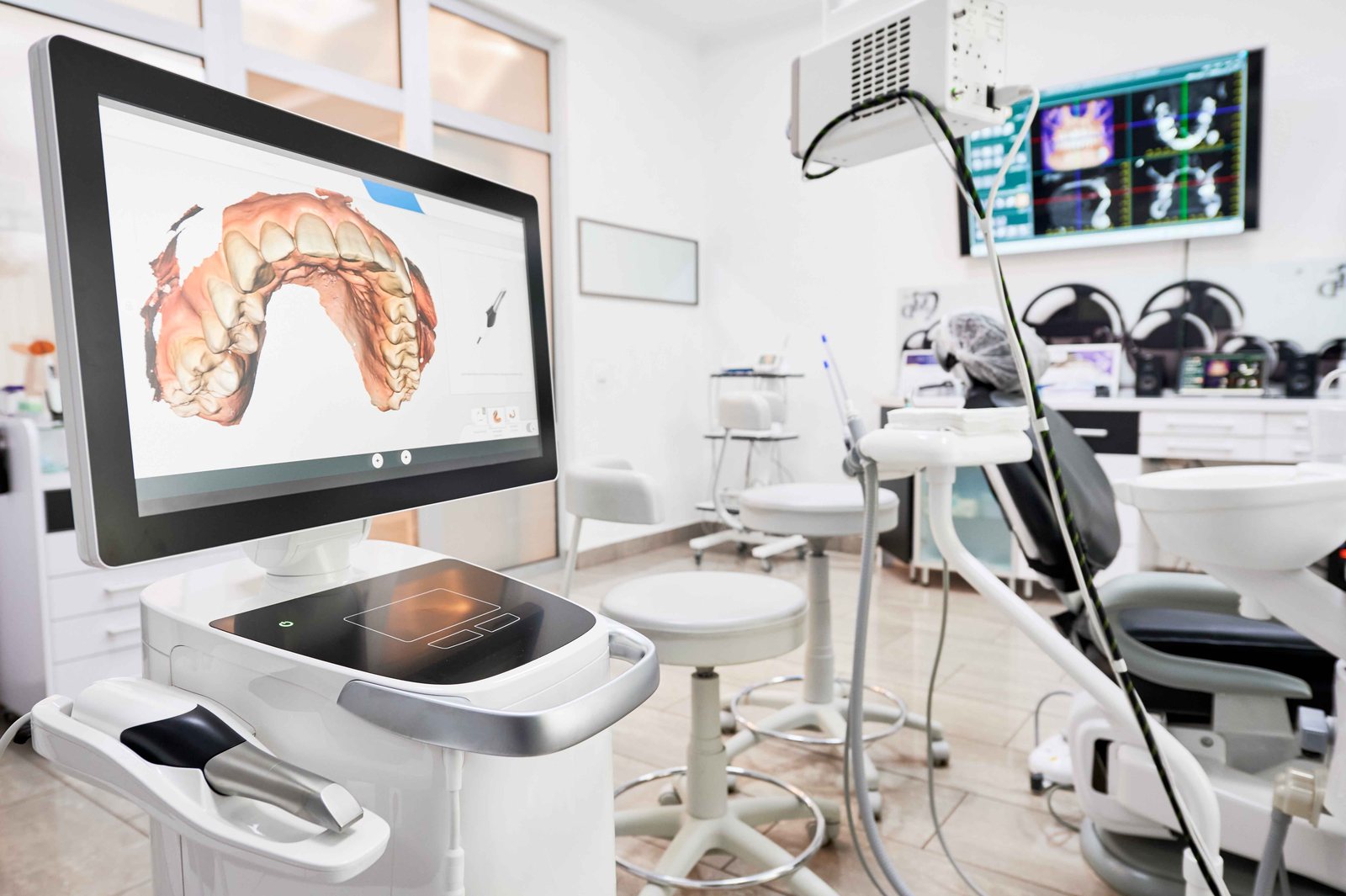
At Lush Dental Heights, Invisalign treatment starts with a free consultation and a digital iTero scan. Dr. Noorian examines your bite and smile, and the scan previews how your teeth can move.
You leave knowing whether Invisalign is right for you, how long it should take, and what it will cost, with nothing hidden. You can book the consultation as an in-office visit or request a virtual one.
So, how much is Invisalign at our office? It depends on your case, and you will know your price at your consultation. Ask about our current Invisalign offer when you book.
Financing is available through Cherry, CareCredit, Sunbit, and HFD, pending approval. When treatment is complete, we provide retainers to hold your new smile, with the option of Vivera retainers. Straightening also pairs well with teeth whitening once your aligners are done.
Our office is at 5307 N Main St, Suite 200, and we see Invisalign patients from across Houston, including Greater Heights, Garden Oaks, and Rice Military. To book your free consultation, call (713) 487-9618 or request an appointment online.
It depends on your total fee, any insurance or down payment, and the length of the financing term. At Lush Dental Heights, ask about our current Invisalign offer and monthly financing options when you book. Financing is subject to approval.
The fee covers more than plastic trays. It includes your exam and digital scan, a plan for every stage of tooth movement, a full series of custom aligners, and check-ins throughout treatment. Cases that need more aligners or more time cost more.
Often, yes. Because the fee depends largely on how many aligners you need, a minor case, such as teeth that shifted after braces, usually costs less than full treatment. Only an exam and scan can confirm how minor your case is.
It depends on the office, so ask before you start. CareCredit puts the average clear plastic retainer at $181. At Lush Dental Heights, we provide retainers when treatment is complete. Ask about our current Invisalign offer to see what it includes.
CareCredit says a replacement may cost $75 to $300, depending on your dentist’s policy, and some offices include a set number of replacements. If you lose or crack an aligner, contact your dentist the same day, so your teeth do not drift while you wait.
Not as a rule. CareCredit’s figures are not split by age, so the $5,108 national average is a fair guide to the average cost of Invisalign for adults, too. Age matters more for insurance, because some plans include orthodontic benefits for adults and others do not.
No. Many offices offer monthly payment plans or third-party financing, and you may be able to use HSA or FSA funds. At Lush Dental Heights, financing is available through Cherry, CareCredit, Sunbit, and HFD, pending approval.

© Lush Dental Heights
Website by Wonderist Agency | Privacy Policy
